
Media wall planning
A great media wall rarely happens by accident. Most successful installations start with careful planning.
Before building anything, it helps to check the layout, viewing distance, power requirements and room proportions. This checklist walks through the key decisions to make before installation begins.
Table of contents
- Choose the correct wall
- Confirm TV size and viewing distance
- Plan the fireplace position
- Check wiring and socket placement
- Plan storage and shelving
- Consider lighting and room balance
1. Choose the correct wall
The wall you choose affects the entire layout.
Ideally the media wall should sit on the main focal wall of the room without blocking doors or windows.
Avoid narrow wall sections
Check furniture placement
Ensure walkways remain clear
If the layout feels awkward, it may be worth reviewing room suitability for media walls.
2. Confirm TV size and viewing distance
TV size should always match the room depth.
Installing an oversized screen in a small room often makes the wall feel overwhelming.
Measure the seating distance
Choose a TV that suits that distance
Ensure the TV sits near eye level
The media wall size guide explains typical viewing distances.
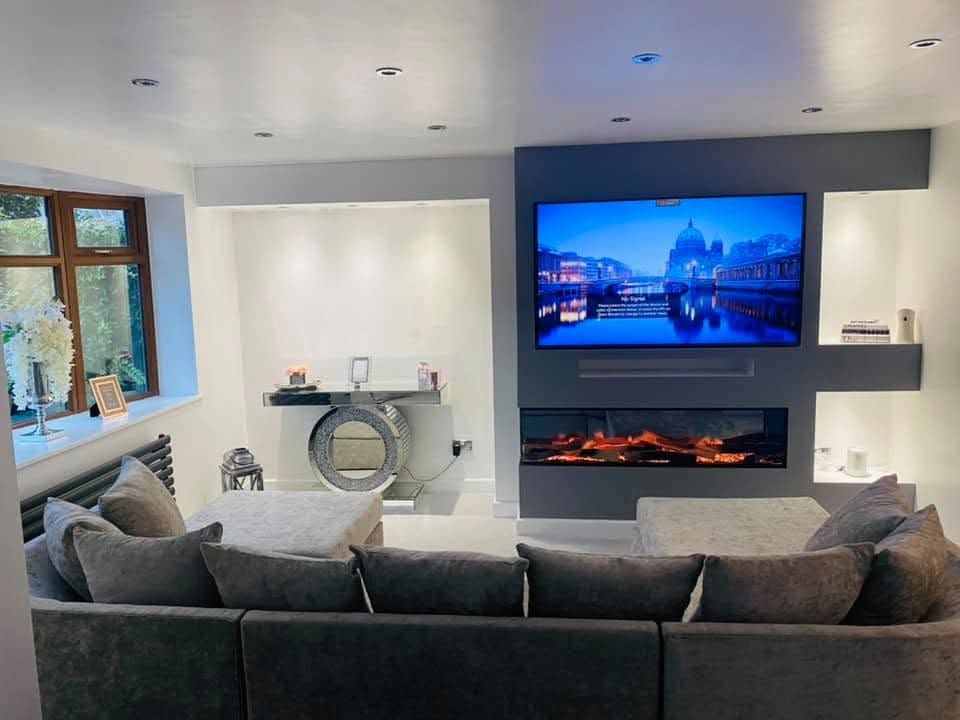
3. Plan fireplace placement
Fireplaces are a popular feature in modern media walls.
However they affect the height of the TV and overall proportions.
Allow safe clearance distances
Ensure the TV is not mounted too high
Plan power supply and ventilation
If you are unsure whether to include one, review fireplace pros and cons.
4. Plan sockets and wiring
Media walls require more electrical planning than most people expect.
Typical installations include sockets for:
TV
Soundbar
Streaming devices
LED lighting
Electric fireplace
This stage is covered in detail in planning sockets and wiring.
5. Plan storage and shelving
Many media walls replace traditional TV units.
That means you still need somewhere for devices and accessories.
Game consoles
Streaming boxes
Routers
Planning storage early prevents clutter around the wall later.

6. Check room balance and proportions
A media wall should complement the room, not dominate it.
Leave breathing space around furniture
Avoid oversized shelving
Keep the design balanced
Simple designs often look better long term than heavily decorated feature walls.
FAQs
How deep should a media wall be?
Most media walls are between 300mm and 500mm deep depending on storage and fireplace requirements.
Do I need planning permission for a media wall?
Media walls inside a property normally do not require planning permission.
Can media walls include LED lighting?
Yes. LED strips and recessed lighting are common design features.
Can media walls be built on chimney breasts?
Yes, but the design must account for depth and structural considerations.
Plan first, build second
The best media walls are designed around the room rather than forced into it.
Taking time to plan the layout ensures the finished wall feels balanced and comfortable to use.