
Media wall installation guide
A media wall looks simple when it is finished. The planning behind it is not.
TV height, fireplace positioning, wiring, ventilation, and storage all have to work together. This guide explains how professional media wall installation works so you know what to expect before starting a project.
Table of contents
- What media wall installation actually involves
- Planning the layout before any building starts
- Choosing the right materials and structure
- Electrical planning and cable management
- Fireplace installation and heat considerations
- Finishing, plastering and final setup
What media wall installation actually involves
Many people assume installing a media wall simply means building a frame and fixing a TV. In reality it is a structured process involving several stages.
-
Room measurement and layout planning
-
Stud framework construction
-
Electrical and cable planning
-
Fireplace installation if included
-
Plasterboard, finishing, and decoration
-
TV mounting and final setup
A well installed media wall should feel built into the room, not added to it.
Step 1: Planning the layout
The layout determines whether a media wall feels balanced or awkward.
Installers normally start by reviewing the room and confirming:
TV size and viewing distance
Available wall width
Fireplace placement if included
Storage requirements
Speaker or soundbar positioning
If you have not confirmed the correct TV size yet, it helps to review the media wall size guide before planning the build.
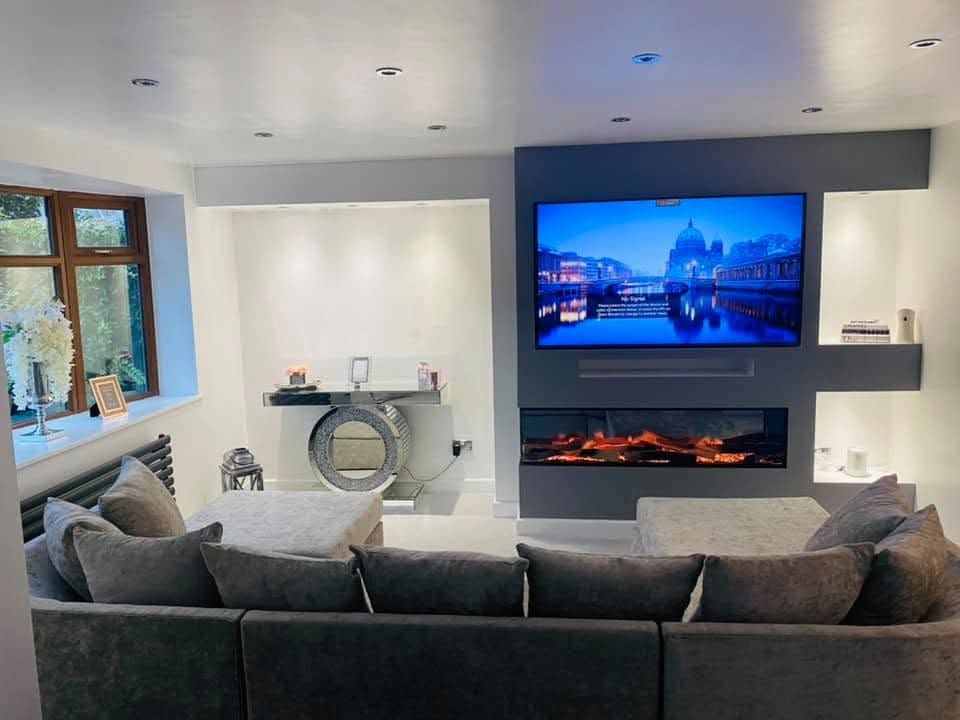
Step 2: Building the framework
Most media walls are built using timber or metal stud framing.
This structure creates the depth needed for recesses, shelves and fireplaces.
The frame normally includes:
TV recess framing
Fireplace cavity
Storage shelves
Cable routing space
If you want to see how frameworks are normally built, media wall stud work guide explains the framing stage in detail.
Step 3: Electrical planning
Electrical planning is one of the most important parts of installation.
Once the wall is built, moving sockets becomes difficult.
A typical installation will include:
TV power socket
Fireplace power supply
LED lighting circuits
Soundbar and media device power
Data or HDMI cable routing
This stage links closely with planning sockets and wiring.
Step 4: Fireplace installation
Many modern media walls include electric fireplaces.
These units require:
Correct clearance distances
Ventilation space
Safe mounting surfaces
If you are unsure whether a fireplace suits your layout, see fireplace or no fireplace.

Step 5: Finishing the media wall
Once the structure and wiring are complete, the wall is finished.
Typical finishing stages include:
Plasterboard installation
Plastering or skim coating
Painting or decorative finishes
TV mounting and lighting setup
FAQs
How long does media wall installation take?
Most installations take between two and five days depending on size and complexity.
Do I need an electrician for a media wall?
Yes. Electrical work must be installed safely and often requires a qualified electrician.
Are media walls suitable for small rooms?
Yes, but the design should be slimmer and simpler to avoid overcrowding the space.
Do media walls add value to a home?
Well designed media walls can improve living room presentation and buyer appeal.
Next steps
Planning properly is the difference between a media wall that looks impressive and one that feels awkward.
If you are exploring design options, start by viewing real examples of media wall layouts and installation styles.