
A bespoke media wall and a quality TV unit both have their place — the right choice depends on your room, your budget, your lifestyle, and how long you plan to stay in the property. This guide sets out an honest comparison so you can decide which direction suits you, without the sales pitch.
Quick answer
-
A media wall is a permanent, built installation. It looks more impressive, hides all cables, can include a fire, and becomes part of the room — but it’s a bigger investment and stays when you leave.
-
A TV unit is flexible, lower cost, and comes with you when you move — but cables are rarely fully hidden and the look is harder to tailor to the room.
-
Cost: A quality TV unit costs £300–£2,000+. A bespoke media wall typically starts from around £1,500–£3,000+ depending on size, finish, and whether a fire is included.
-
Best for media wall: You own the property, you’re staying a while, and you want a finished-looking lounge that’s built to your exact specifications.
-
Best for TV unit: You rent, you move frequently, you’re furnishing a room temporarily, or you want maximum flexibility to change things in future.
What each option actually is
A media wall
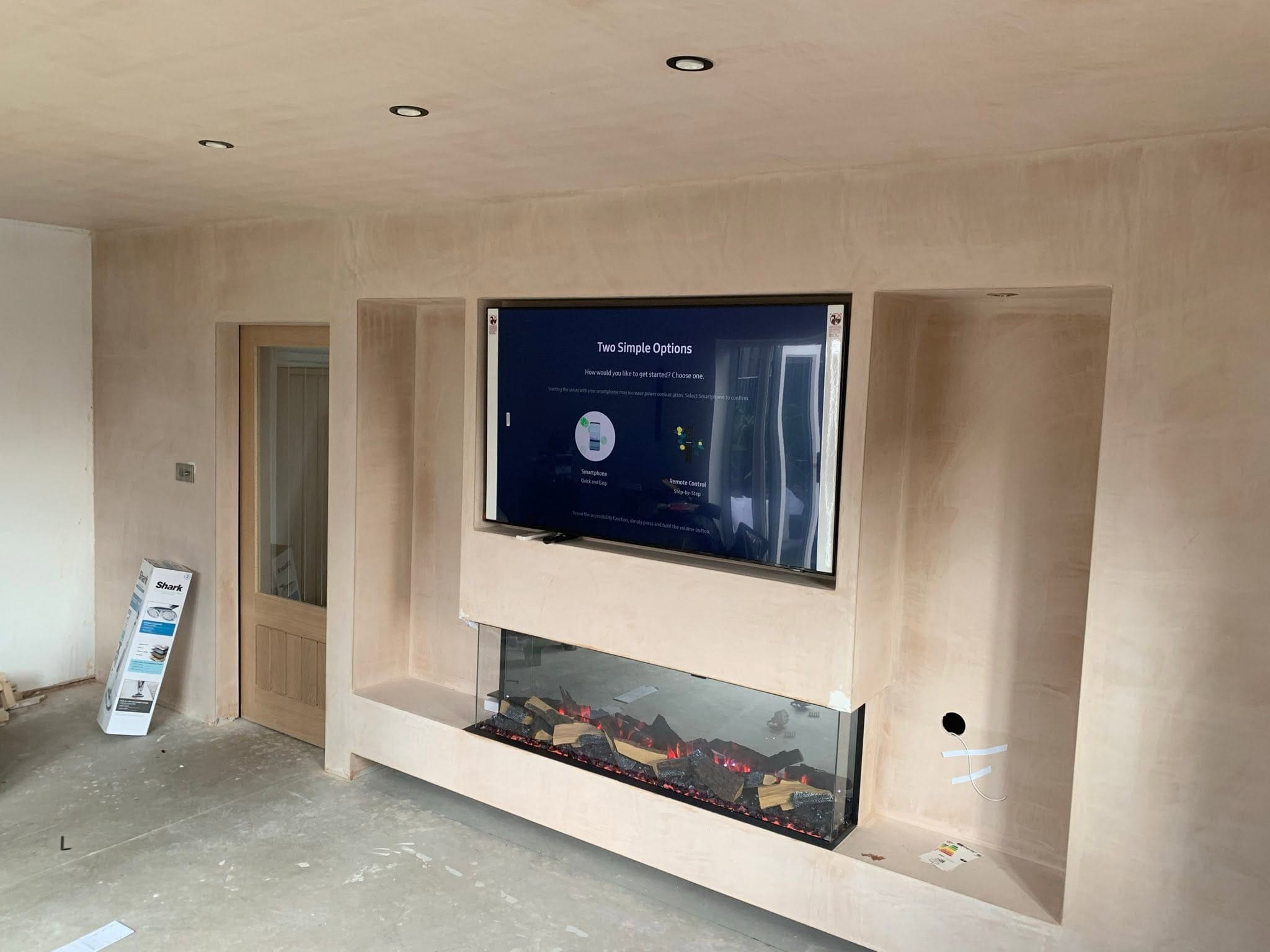
A media wall is a bespoke, built-in installation. A timber frame is constructed against the wall, plasterboarded, plastered, and finished to become a permanent part of the room. The TV is wall-mounted directly into the frame, cables are hidden inside the structure, and optional features — integrated electric fire, shelving, storage compartments, AV cubby holes, LED accent lighting — are all built in during the installation.
The result is a room feature that looks like it was always there. There’s no visible TV stand, no trailing wires, and no unit that needs dusting around.
A TV unit
A TV unit — sometimes called a TV stand, media console, or television cabinet — is a piece of freestanding furniture that sits on the floor and supports the TV at a set height. It typically has shelves or doors for AV equipment, and some have cable management holes built in. Higher-end units can include floating, wall-hung designs that give a cleaner look than a traditional floor-standing piece.
The TV is either placed on the unit’s surface, or bracket-mounted on the wall above it with the unit underneath for storage. Either way, the unit itself is separate from the wall and can be moved.
Cost comparison
Cost is usually the first point of comparison — and it’s where the two options are most clearly different.
| Option | Typical cost range | What affects price |
|---|---|---|
| TV unit (mid-range) | £300–£800 | Brand, materials, size, design |
| TV unit (premium/bespoke joinery) | £1,000–£2,500+ | Custom dimensions, fitted cabinetry, materials |
| Media wall (standard) | £1,500–£2,500 | Wall size, finish, shelving, lighting |
| Media wall with integrated fire | £2,500–£5,000+ | Fire model, wall complexity, finish specification |
Worth noting: The cost gap between a premium bespoke TV unit and an entry-level media wall is often smaller than people expect. A custom-built fitted media cabinet from a joinery company can approach media wall costs — but without the TV mounting, cable management, and fire integration that a built media wall includes. Always compare like for like.
A media wall also adds perceived value to a property in a way a piece of furniture doesn’t. It’s a room feature, not a possession — and potential buyers typically respond well to a well-built, professionally finished media wall.

Aesthetics: how each option looks
Media wall
When built and finished well, a media wall looks architectural — it becomes part of the room rather than something placed in it. Cables disappear entirely inside the structure. The TV appears to float in the wall. If a fire is included, the composition of screen, flame, and shelving creates a focal point that’s difficult to achieve with furniture alone.
The finish options are also broader: plaster and paint, stone effect panels, timber cladding, alcove recesses, integrated LED strips, open shelving, and closed AV compartments can all be incorporated into a single cohesive design.
TV unit
A well-chosen TV unit can look excellent — particularly a quality floating wall-hung design with clean lines. The challenge is cables: most TV units have a cable management hole or channel, but wires between devices and from the wall socket are rarely fully invisible. The gap between “tidy” and “the cables are hidden” matters more than many people expect until they’re living with it.
The unit’s dimensions are also fixed at purchase. If your room layout changes, your TV size upgrades, or you later want storage in a different configuration, the unit may not adapt.
Honest take: A media wall wins on aesthetics in most rooms — but the gap is larger in some homes than others. A large, well-lit open-plan space with good furniture looks great with a quality floating TV unit. A smaller lounge with a chimney breast, AV clutter, and a mix of devices is where a built media wall makes the biggest visible difference.
Practicality and flexibility
Media wall: what you gain
-
All cables completely hidden — HDMI, power, ethernet, audio all routed inside the structure
-
AV equipment stored in ventilated compartments with IR signal pass-through — consoles, Sky Q, streaming boxes all hidden
-
Integrated fire option — electric cassette fires built into the base of the wall, no separate unit or installation needed
-
Custom height, width, and shelving configuration — built to your exact room and to your brief
-
No furniture footprint on the floor — useful for smaller rooms where a TV unit takes up noticeable floor space
Media wall: what you give up
-
It stays in the house when you move — a media wall adds value to the property, but it doesn’t come with you
-
Changing the layout significantly later (e.g., repositioning the TV or adding a fire) means opening up the wall — it’s possible but not trivial
-
Not an option for renters — a built installation isn’t appropriate in a rented property without specific landlord agreement
TV unit: what you gain
-
Portable — it moves with you when you leave the property
-
No building work required — no mess, no disruption, no trade visits
-
Can be changed, replaced, or resold independently of the room
-
Suitable for renters and temporary accommodation
TV unit: what you give up
-
Full cable concealment is rarely achievable — at minimum, the wall socket cables are usually visible
-
AV equipment is accessible but visible — consoles, boxes, and remotes clutter the unit surface over time
-
Dimensions and configuration are fixed at purchase — not as adaptable to your room’s specific proportions
-
No integrated fire option without a separate freestanding unit
Who a media wall is right for
A bespoke media wall is the better choice if most of these apply to you:
-
You own your home and plan to stay for at least a few years
-
Cable clutter and AV equipment visibility bothers you more than the cost to fix it
-
You want an integrated electric fire as part of the design
-
Your lounge has a chimney breast, awkward proportions, or a layout where a TV unit looks out of place
-
You want the living room to look designed, not assembled from separate pieces of furniture
-
You have a specific TV size or configuration in mind that no off-the-shelf unit serves well
Who a TV unit is right for
A TV unit is the sensible choice if most of these apply to you:
-
You rent your property or are likely to move in the near term
-
Budget is the primary driver and a lower upfront cost matters more than the long-term result
-
You prefer the flexibility to change your room layout frequently
-
The room is already well-proportioned and a quality floating unit will look good without a full installation
-
You’re furnishing a room temporarily while you decide on a longer-term approach
Watch out: Some homeowners choose a TV unit as a temporary measure and end up living with it for years, tolerating the cable clutter and the look all along. If a media wall is the right long-term answer, the cost of the unit is effectively spent twice. It’s worth having the conversation with an installer early to understand what a built wall would actually cost in your specific room.
Common questions when comparing the two
Does a media wall add value to a property?
A well-built, professionally finished media wall is generally viewed positively by buyers — it’s a room feature that suggests quality and attention to detail. An amateur build or an overbuilt design in a small room can have the opposite effect. The key word is “professionally finished.” A quality media wall installation adds to a room’s appeal; a rough DIY job done on the cheap can detract from it.
What if I want to upgrade my TV later?
A media wall is designed around a TV size range, not a specific model. The bracket positions and recess dimensions accommodate TVs within a certain size band. When we build a media wall, we always discuss future TV size intentions so the structure is built with headroom for a reasonable upgrade — for example, designing for a 75-inch even if you’re starting with a 65-inch.
Can I add features to a TV unit to get a similar result?
You can get some of the way there with cable management accessories, a separate wall bracket above the unit, and a freestanding electric fire alongside — but the result is a collection of separate pieces rather than an integrated design. The cable problem in particular is difficult to fully solve without routing wires inside the wall structure itself.
FAQs
How long does a media wall installation take?
Most installs take 2–4 days on site, depending on size, finish, and whether a fireplace is included. A media wall with an integrated fire typically completes within 3–5 days. We’ll give you a specific timescale when we quote based on your room.
Is it possible to remove a media wall if I change my mind?
Yes — a media wall is a timber frame with plasterboard and plaster, not a structural element. It can be removed, though it’s a disruptive job that involves making good the original wall behind it. In practice, most homeowners who have a media wall built don’t regret it — but it’s good to know the option exists.
Can I get a media wall that looks more like furniture and less like a built wall?
Yes. A media wall can be finished with painted MDF panels, timber cladding, or decorative panels that give it more of a furniture aesthetic. Some customers want the full architectural look; others want something that feels more like premium fitted furniture. We can discuss both approaches and show you examples from previous builds.
What if I want a fire but my room doesn’t have a gas supply?
An integrated electric fire runs from a standard 13A socket — no gas supply, no flue, no chimney required. This is actually one of the reasons electric fires in media walls have become so popular. The cassette inserts into a purpose-built recess, and the effect is indistinguishable from a gas or solid fuel fire at normal viewing distance.
Do I have to choose between a media wall and keeping my existing storage?
Not at all. Built-in shelving, cupboards, and AV compartments are standard parts of a media wall design. If you currently have a TV unit for storage, we can design the media wall to accommodate the same storage capacity — or more — within the built structure.
Not sure which is right for you?
The easiest way to find out is to have a conversation. Send a photo of your wall and your TV size — and whether you’d like a fire — and we’ll give you a straight answer on whether a media wall makes sense for your room, what it would involve, and what it would cost.
We’ve worked in homes across Sheffield, Doncaster, Barnsley, Rotherham, Leeds, and the wider South Yorkshire area for over 20 years. We’re happy to give an honest assessment of whether a built media wall is the right call for your specific situation — not just for ours.
Send a photo and ask a question
Call 07477 405111 | Email dan@mediawallmaster.co.uk
See what’s included in a full media wall installation, or explore integrated fireplace options for your media wall.