
A well-built media wall should last 15 to 20 years without structural work. The framework itself is essentially permanent — what ages is the surface finish, and what needs occasional attention is the fire and the electrics. Here’s a practical guide to keeping your media wall looking its best, and what you can do years down the line when you want to refresh the look.
This guide covers regular cleaning, annual maintenance checks, repainting, and lower-cost ways to update your media wall without a full rebuild.
Regular cleaning: what to use and what to avoid
Painted surfaces (MDF or plasterboard)
Painted panels are the most common finish and the easiest to maintain. Wipe with a barely damp microfibre cloth for general dust and fingerprints. Avoid anything too wet — water can cause MDF edges to swell and paint to bubble. For marks, a tiny drop of diluted washing-up liquid on a damp cloth usually works. Rinse with a clean damp cloth afterwards.
Don’t use abrasive cleaners, spray polishes, or solvent-based products. These strip the paint finish over time and make re-coating harder.
Stone-effect cladding panels
Stone cladding traps dust in the texture, so a soft dry brush works better than a cloth. Brush from top to bottom to avoid pushing dust further into the surface. Avoid soaking the panel — most stone-effect boards are moisture resistant but not waterproof at the edges, and prolonged dampness can cause swelling or delamination.
Oak or slatted panels
Dust regularly with a dry cloth or soft brush, running along the grain. An occasional wipe with a very lightly dampened cloth is fine for general cleaning. Avoid anything that leaves a wet residue in the slat gaps — moisture in the joints can cause the slats to swell slightly and create visible gaps when they dry.
LED strips and niche recesses
Recesses and LED channel housings collect dust more than other parts of the wall. Use a soft dry brush or a compressed air duster to clean around the LED strip. Don’t spray liquid into the LED channel, and don’t use a damp cloth directly on the LED components.
Annual maintenance checks
A quick run-through once a year takes about ten minutes and helps catch small issues before they become bigger ones:
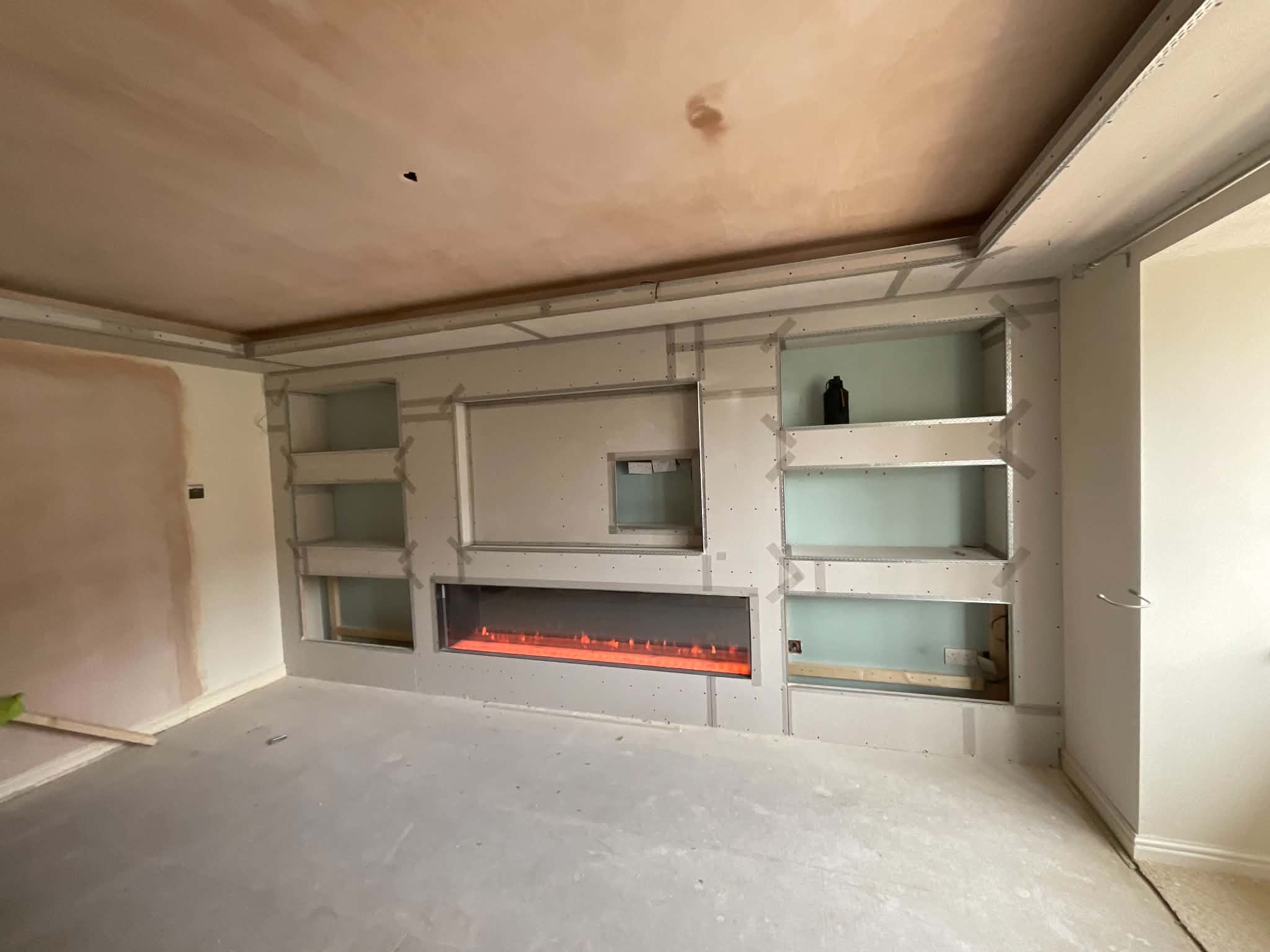
- Corner and edge beads: Check for chips or small cracks along any external corners. Fill with a small amount of fine filler, sand lightly, and touch up with matching paint before the crack extends.
- Around the fire opening: The area immediately surrounding the fire experiences the most thermal movement — the frame expands slightly when the fire is running and contracts when it cools. Small hairline cracks along the line between the fire trim and the surrounding wall are normal. Fill with a flexible filler (not a hard all-purpose filler) and repaint. Larger or recurring cracks may suggest the fire’s ventilation clearance needs checking.
- TV bracket fixings: Make sure the wall bolts are still firm. Full-motion brackets are adjusted regularly and fixings can loosen over time. Tighten with a spanner if needed — but don’t overtighten, especially into plasterboard anchors.
- Fire function: Run the electric fire through all its settings every few months, including the heat settings. Electric fires have LED components and mechanical flame effects that can develop faults. Catching them early means a simpler repair.
Repainting your media wall
Most painted media walls benefit from a full touch-up or repaint every 3 to 5 years, depending on how the room is used. Scuffs near the fire, fingerprints at knee height, and gradual fading near windows are the most common signs it’s time.
When repainting:
- Use the same paint type and sheen level as the original (flat matt, eggshell, or satin)
- Lightly sand any marks, bumps, or filled areas before painting
- Fill any small cracks or chips first, then sand flush
- Paint the full panel face — not just the marked area — to avoid patches
If you don’t have the original paint reference, take a small chip or scraping to a decorator’s merchant for colour-matching. Most will match to within a shade or two.
Refreshing the look without a full rebuild
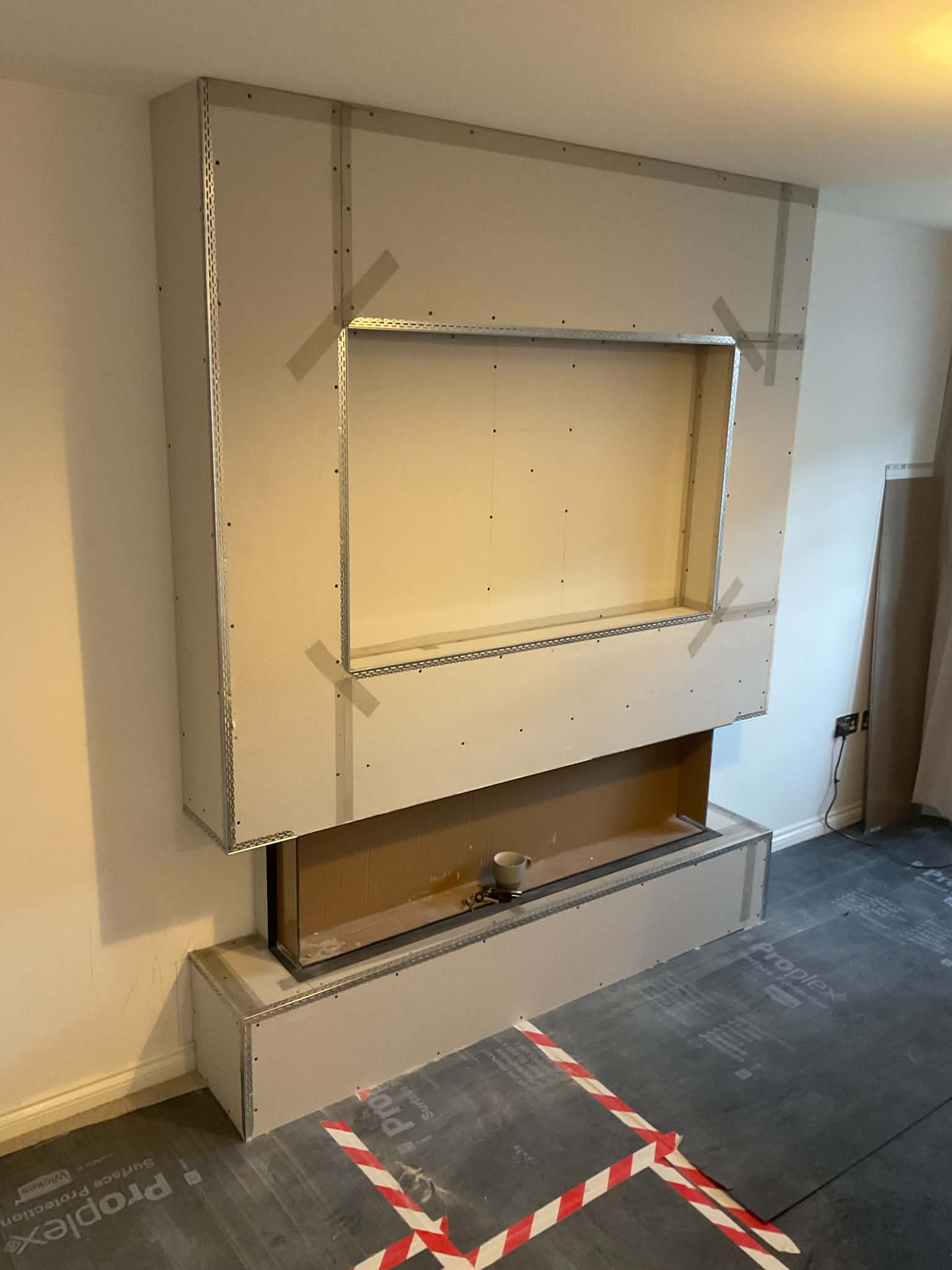
If your media wall is starting to feel dated — or your tastes have changed — there’s quite a lot you can update without touching the framework. A few approaches that work well:
Repaint in a new colour
The single most impactful change. An existing painted media wall can be sanded, primed, and repainted in a completely different colour. Dark walls painted slate grey, navy, or deep green can transform the feel of a room entirely. The media wall service page shows a range of finishes if you’re looking for inspiration.
Add surface panelling
Oak slats, fluted MDF panels, or stone-effect cladding can be applied to an existing painted surface. This doesn’t require the framework to be opened up — the panels fix directly to the existing face. It adds depth and texture to a wall that might otherwise feel flat.
Change the fire surround
If your electric fire has a decorative front panel or trim surround, this can often be swapped for a new model without changing the recess opening. Check the new trim dimensions match the existing opening before purchasing.
Update the LED lighting
If your media wall has LED strip lighting in channels or niches, this is one of the most straightforward updates. New LED strips with different colour temperatures, warm-to-cool adjustability, or colour-changing capability can be retrofitted into existing channels. Most are plug-and-play if the driver is accessible.
Rearrange or add shelving
If your media wall has alcoves or niches, shelf positions can often be adjusted. New shelf brackets, a different shelf depth, or even adding a new niche to an existing panel are all possible without a full rebuild — though anything structural needs professional involvement.
When to call a professional
Some jobs are worth leaving to a tradesperson, even when the wall itself is already built:
- After water damage: If there’s been a leak or damp issue behind or near the wall, don’t just repaint over it. The underlying MDF or plasterboard may be saturated and will need to be replaced.
- Moving the TV position: A new bracket fixing point needs to hit a backing panel or structural stud. Drilling into the wrong spot can miss the support. An installer can locate the framing and fit a backing board if needed.
- Electrical work: Adding new sockets, moving existing ones, or extending the fire’s supply circuit all need a Part P qualified electrician.
- Structural changes to the frame: Widening the fire opening, extending the wall height, or adding a built-in storage section all require reopening the frame. Contact your original installer or an equivalent builder.
How long does a media wall last?
A well-built media wall — properly framed, finished, and maintained — should last 15 to 20 years without needing structural work. The framework is essentially permanent. What ages is the surface finish, the fire (electric fires typically have a lifespan of 10 to 15 years with regular use), and occasionally the TV bracket.
Planning a media wall and thinking about long-term care from the outset? Choosing a paint finish that’s easy to touch up, and an electric fire model with good parts availability, makes a real difference further down the line. We’re happy to talk through this as part of your initial consultation.
Frequently asked questions
How often should I clean my media wall?
For most living rooms, a light dust every couple of weeks and a more thorough clean every two to three months is enough. Rooms with solid-fuel fires nearby, high cooking activity, or significant outdoor dust may need more attention.
Can I add shelves to my media wall after it’s built?
Yes, in most cases. Timber stud frameworks allow direct bracket fixings into the studs. Metal stud frameworks require a fixing into the stud web or a backing board for anything heavier than decorative items. Avoid relying solely on plasterboard anchors for anything with real weight on it.
The paint has cracked around the fire opening — is this a problem?
Small hairline cracks are common and are caused by thermal cycling (the wall expands when the fire is on and contracts when it cools). Fill with a flexible filler — not a hard all-purpose filler, which will just crack again — sand, and repaint. If the cracks are large or recurring, it may indicate the fire is running too hot for its ventilation clearance.
My electric fire has stopped working. What should I check first?
Most electric fires have a built-in reset that trips if the fire overheats or the electrical supply is interrupted. Start with the fuse in the plug or the dedicated spur, then check your consumer unit. If neither is the issue, the fire may need its thermal cutout reset — refer to the manufacturer instructions or contact an electrician. Most electric fires can be repaired rather than replaced.
Planning a media wall?
Send a photo of your wall and your TV size (and whether you want a fire) and we’ll come back with a layout idea and a fixed price.
Or call 07477 405 111 / email dan@mediawallmaster.co.uk